

New-build knowledge
The double-storey move: up one internal staircase
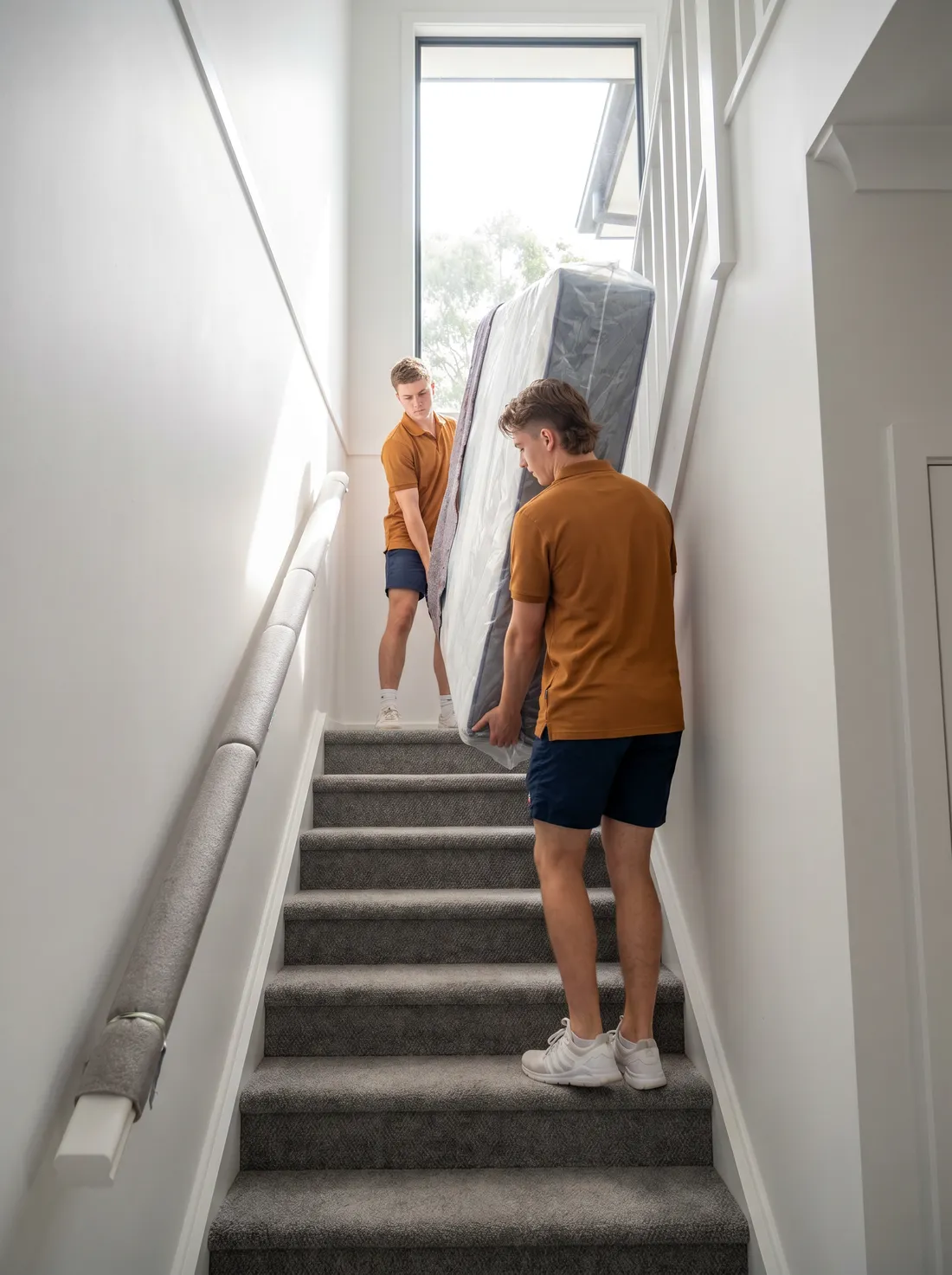
The growth-front house plan is consistent: living down, bedrooms up, and one internal staircase connecting them. On moving day that staircase is the whole game. Here's how the upstairs of a house gets up it without a mark.
Before anything moves: the protection pass
In a new build the paint is days old, the carpet is week-old, and every scuff shows. So the first fifteen minutes of the unload aren't carrying, they're wrapping the house:
- Rail padding. The handrail is the most-hit surface on any staircase. A moving blanket taped around it takes the contact instead.
- Floor runners along the hallway and up the stair treads, so a hundred bootsteps land on canvas, not carpet.
- Door jamb guards on the front door and the tightest upstairs doorway. The jamb corner is where furniture bites first.
- Corner checks. We sight the stair's pinch points, usually the mid-flight turn and the top newel, and agree the carry line before the first lift.
The carry itself
Stairs are technique, not heroics. The moves that matter:
- High-low. Two carriers: the lower one holds high, the upper one holds low, which keeps long items level on the diagonal and the weight shared instead of hanging off the bottom person.
- The queen base goes up on its side. Mattresses bend and bag; bases don't. On its long edge, a queen base tracks the stair line and pivots at the turn. That pivot is the move: unhurried, called aloud, one step at a time.
- Tallboys and drawers travel empty and taped. Weight you take out downstairs is weight that doesn't meet the plaster upstairs.
- One item on the stairs at a time. The staircase is a single-lane road. We treat it like one: one carry up, clear, next carry. Rushing two items onto a flight is how walls get elbowed.
The quiet skill of stair work isn't strength, it's patience at the pivot. Every mark we've ever seen on a new stairwell came from hurrying the turn.
What genuinely doesn't fit
Honesty corner: some things don't go up some staircases, and it's better to know before the day.
- Oversized sofas upstairs are the usual suspect. If a lounge is headed for an upstairs rumpus, give us its dimensions when you book and we'll sanity-check the stair before the truck comes, not at the bottom step.
- King bases usually come split in two on modern designs, which solves themselves. Older one-piece kings deserve a measurement conversation.
- The balcony option (lifting over a rail) exists for some floor plans, but it's a planned lift with the right gear and enough hands, never an improvisation. If it's needed, it goes in the quote.
What this means for your hours
A double-storey unload runs longer than a single-storey one; that's physics, not padding. The way to keep it tight is everything above, plus one thing on your side: label upstairs boxes by room ("Bed 2", not "stuff") so each carry lands once. On the clock, an organised double-storey move-in with a 3-mover crew is comfortably inside a normal moving day.
Moving to the growth front?
The staircase is one of the three things we plan before any new-estate move. The other two live on the suburb pages: The Ponds and Marsden Park.